
Hello there!
So you just got a carnivorous plant; it’s an exciting day for sure! But how do you care for it? It can be daunting, but it’s really not too difficult; carnivores are some of the most rewarding plants one can grow. This guide will help you find your feet and get started with a fun, mildly obsessive hobby. While aimed at growers in the Cape area of South Africa, this guide is applicable around the country and overseas if you happen to stumble across it 🙂
Let’s start.
The basics
While the variety of carnivorous plants is daunting, there are a few basic requirements that apply across the board for successful cultivation of carnivorous plants, namely:
- Water with a low mineral content
- Nutrient-free substrate
- Good light
Without these, your plants will struggle, leading to poor growth and more issues with pests and disease.
Water quality
Carnivorous plants grow on the moister side of things, making proper watering a crucial step for growing. Those of us living in Cape town and surrounds are blessed – our water out of the tap is perfect. Carnivorous plants generally grow in more acidic, low-mineral environments. Therefore, soft water is a must! The general wisdom is water with a Total Dissolved Solids (TDS) content of 50ppm or less is required. This is easily tested with a cheap TDS meter or at a fish shop. Cape tap water is usually 40ppm or less and I use it without issue. Rainwater is also great although acid rain can be problematic in parts of the country. For borehole water testing is important and may not be usable all over the country.
If your water quality is not up to snuff, Reverse Osmosis (RO) water from water shops, aquarium stores, or dispensers is perfect. You can also get filter kits to make your own which is cheaper in the long run. Distilled water is expensive and wholly unnecessary; RO is perfectly fine.
Nutrient-free substrate
Compost kills carnivores – don’t forget it. Carnivory evolved to get extra nutrients for plants growing in places where nutrients are sparse. As a result, they generally don’t want any nutrients in their root zone, which can quickly burn and kill the plant. Use of a substrate with low nutrients is critical for success. This usually takes the form of sphagnum peat or sphagnum moss, which is acidic, low in nutrients, and retains water well. Make sure to check the bag, any amended, buffered, or nutrient added peat must be avoided! Washed and buffered coco coir can be great for Nepenthes if the quality is right; too much salt from poorly washed coir can kill them. Perlite, silica sand, pumice, and other inert additives are beneficial for drainage. Pinguicula (butterworts) love inorganic mix – more on that later.
In short, avoid compost and get the good stuff from a reputable vendor to keep your plants happy.
Lighting
This is the last but often most overlooked part of growing carnivorous plants. They thrive on light! At a minimum most carnivorous plants require at least a few hours of bright light per day. This varies by group, but almost none of them want to be in the shade! I will go into more detail in the respective sections. But how do I know if I have enough light you may ask, well, the plants tell you. Pale green, leggy growth is the first sign that they are underlight, usually paired with poor development of tentacles or traps. This is usually the biggest culprit as to why a plant doesn’t look nice. Adequately lit plants will have good colour, normal development of their traps, and grow well. Too much light can manifest in excess pigment, sunburn marks, or straight up frazzling.
Artificial lighting is absolutely wonderful and is a cheat code for growing more fickle plants that don’t want to be outside. Good LED lighting from Hydroponic stores is my go to for affordability and lower running costs, providing great growth without the heat and elements from outdoor growing.
Past that, these plants are not too bad!
Care guide by genus
Here I will quickly summarise how to grow plants from each major group you usually see available and some tips, exhaustive guides to come in future (hopefully!)
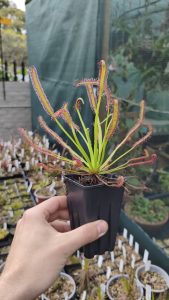
Drosera / Sundews:
- Light – At least a few hours of direct sun per day!
- Watering – Tray water, don’t let them dry out! 2-4cm depth is fine
- Humidity – Beneficial but not required for most
- Substrate – Peat or sphagnum based is best. 30-50% grit (perlite or sand) is useful for aeration
- Dormancy – Some species in colder areas will die back. Mostly perennial
- Temperatures – Fairly tolerant, avoid extremes (Below 0, above 35)
- Pests – Prone to aphids, use contact insecticide as directed
- Fertilising – 1/4 Strength Seagrow or similar as a light foliar feed every 2 months
- Pro tips – Grows great from root cuttings! Deeper pots = bigger plants. They always look great under LED lighting 🙂
Nepenthes / Tropical Pitcher Plants:
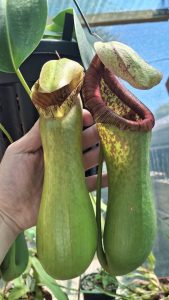
- Light – Bright, filtered light through the day. Can take cool direct sun, avoid hot sun.
- Watering – Top water! Keep moist but not waterlogged, I water when pots start drying out. They don’t like staying soggy.
- Humidity – Highly beneficial, aim for 40%+. Many hybrids are super tolerant of lower humidity, species are more picky.
- Substrate – 50/50 Sphagnum moss and perlite or Coco Coir and perlite is my go to. Airy, well draining. Washed and buffered coir is critical!!!! Otherwise the salt will kill them.
- Dormancy – Not applicable.
- Temperatures – Don’t like being cold, <5c is damaging. Fairly heat tolerant if watered and kept humid.
- Pests – Not frequent, watch out for mites in Autumn.
- Fertilising – Can pitcher feed with dilute organic fertiliser e.g. Seagrow.
- Pro tips – Good lighting is key! When the leaves are a hearty green and glossy they are happy. Net pots are epic for Nepenthes.
Pinguicula / Butterworts:
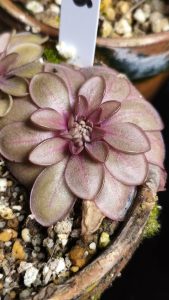
- Light – Bright filtered sun or LED lighting is best. Hot sun will bake them in one afternoon.
- Watering – Tray water but allow to dry slightly, they don’t want to be soggy. Dry out for a few days in winter before refilling.
- Humidity – Not a concern for most species.
- Substrate – Inorganic and airy is best, avoid peat. A mixture of akadama, pumice, lava rock, perlite, and similar works well.
- Dormancy – Winter dormant with succulent growth, usually flower in this time. Water less and enjoy the cuteness.
- Temperatures – Not big fans of cold or excess heat. Keep above 5-10c if possible.
- Pests – Nematodes are an issue if kept in peat. Spider mite can be a problem in summer, and they rot real quick if kept soggy.
- Fertilising – Dilute foliar feeding like sundews.
- Pro tips – Super easy under lights or filtered light, good watering discipline and inorganic substrate made a huge difference for mine.
Dionaea / Venus Fly Traps
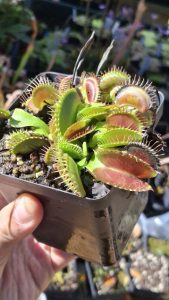
- Light – Lots of sun!!!! These want to be outside. Often they are leggy if kept indoors.
- Watering – Tray water, keep moist. Like sundews keep 2-4cm, can rot if kept too soggy
- Humidity – Not a huge concern
- Substrate – Peat or sphagnum based is best. 30-50% grit (perlite or sand) is useful for aeration
- Dormancy – Winter dormant, will partially or fully die back. They rush back in Spring. No special care but avoid overwatering
- Temperatures – Can take freezing temps if protected from hard freezes. Appreciate some shading from especially hot sun. Generally tolerant.
- Pests – Spider mite can be an issue in summer. Use appropriate pesticide.
- Fertilising – Will feed themselves outside, feeding every trap at once by hand can stress the plant out.
- Pro tips – Repot in August and snip flower stems, they can sap a lot of energy. And give lots of light! Old traps go black, don’t worry about it.
Sarracenia / Trumpet Pitchers
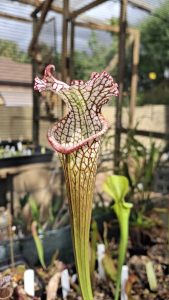
Care is about exactly the same as flytraps! Give a good trim of old, dry growth in Spring.
The end
That about covers it. Some more niche stuff I will have to cover in future such as Cephalotus (same as a sundew care wise), Heliamphora, Utricularia, and so on. But this should get you started. Good luck and have fun!!

0 Comments